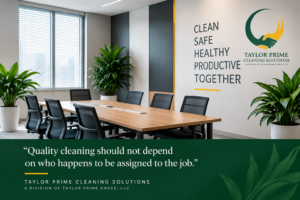
Construction is complete, final details are coming together, and the property is nearly ready for its next chapter. Yet the worksite may still have drywall dust, adhesive residue, marked-up surfaces, and debris that stand between a finished project and a professional handoff. Maryland Post-Construction Cleanup helps bridge that gap.
For general contractors, property managers, developers, facility teams, and business owners, the final clean is more than appearance. It is part of preparing a property for inspections, tenant occupancy, owner turnover, or opening day. Taylor Prime Cleaning Solutions supports a structured approach to commercial cleaning, property turnover, and facility readiness.
What Is Maryland Post-Construction Cleanup?
Maryland Post-Construction Cleanup is detailed cleaning after new construction, remodeling, tenant improvements, or renovation work. It focuses on the dust, residue, and fine debris left behind by construction activities—conditions that routine janitorial cleaning is not designed to address.
Depending on the project, the scope may include floors, baseboards, doors, cabinetry, fixtures, accessible interior glass, and other finished surfaces. The work should be defined in advance, based on the condition of the property, surface materials, access requirements, and the construction schedule.
Why Final Construction Cleaning Matters
1. A cleaner turnover for owners and tenants
New or renovated spaces deserve a presentation that reflects the work invested in them. Detailed cleaning helps create a positive first impression during owner walkthroughs, tenant move-ins, and business openings.
2. Attention to construction dust
Fine dust can settle on horizontal surfaces, inside accessible cabinetry, and along trim. A careful, surface-appropriate process helps address this residue before spaces are occupied. Dust-related health and safety risks must be evaluated based on the materials and work involved.
The U.S. Environmental Protection Agency (EPA) emphasizes the importance of controlling dust, maintaining proper ventilation, and cleaning renovation areas to help protect indoor air quality. Learn more about the EPA’s best practices for indoor air quality during remodeling.
3. Protection for new finishes
New floors, glass, counters, and fixtures can be sensitive to abrasive methods or incompatible chemicals. Cleaning methods should be selected to match manufacturer guidance and the project specifications.
4. Better coordination at project closeout
When cleaning tasks are scheduled alongside punch-list work, contractors can reduce the risk of repeated cleaning caused by unfinished trades, late deliveries, and rework.
What Maryland Post-Construction Cleanup Process Can Include
Not every construction project requires the same stages. A typical scope may be organized as follows, with tasks and exclusions confirmed in the proposal.
Stage 1: Rough Cleaning
Initial cleaning may include sweeping, collecting ordinary loose debris within the agreed scope, and preparing accessible work areas for more detailed service. Bulk construction waste, demolition debris, and disposal services should be assigned separately unless explicitly contracted.
Stage 2: Detailed Interior Cleaning
Once most construction trades have finished, detailed cleaning may address:
- Dusting of accessible walls, baseboards, doors, frames, and trim
Construction dust requires careful handling. OSHA’s construction silica safety guidance addresses dust exposure and identifies housekeeping practices that can create additional airborne hazards. Proper Maryland Post-Construction Cleanup methods should be selected based on the materials and conditions present at each jobsite.
- Wiping accessible counters, shelving, cabinetry, and built-in surfaces
- Cleaning sinks, counters, and bathroom fixtures
- Spot-cleaning of appropriate surfaces and accessible interior glass
- Cleaning light switches, door hardware, and other accessible touchpoints
- Vacuuming, sweeping, or mopping floors using finish-appropriate methods
- Cleaning accessible window sills and tracks where included in the agreed scope
Paint, caulk, grout haze, adhesives, and other specialty residues require a surface assessment and may need an expressly quoted method or a specialist.
Stage 3: Final Touch-Up and Walkthrough
A final touch-up may take place after punch-list repairs, equipment installation, or a later round of contractor traffic. A documented walkthrough helps verify that agreed cleaning tasks have been completed and identify any remaining items.
Scope matters: HVAC duct cleaning, regulated or hazardous dust removal, mold or asbestos remediation, high-access exterior window work, and bulk debris hauling are not assumed to be included in standard post-construction cleaning. These may require appropriately qualified providers and separate arrangements.
How Is Construction Cleaning Different From Routine Janitorial Service?
| Consideration | Routine janitorial cleaning | Post-construction cleaning |
|---|---|---|
| Primary goal | Maintain an occupied space | Prepare a newly built or renovated space for use |
| Common residue | Everyday soil and waste | Construction dust and project-related residue |
| Timing | Recurring scheduled visits | Project-based visits around closeout milestones |
| Scope | Standard recurring tasks | Site-specific detailed tasks and exclusions |
| Coordination | Facility operations | General contractor, trades, and turnover schedule |
Who Benefits From Maryland Post-Construction Cleanup?
General contractors and builders may need a dependable cleaning subcontractor for project turnover, renovation work, or final presentation. Commercial property managers may need cleaning after tenant improvements or before a new lease begins. Building owners and facility managers may be preparing offices, common areas, or other operational spaces for reoccupancy. Developers and multifamily teams may need coordinated cleaning for unit or common-area turnover.
Depending on project requirements and the scope agreed upon, cleaning may also be relevant to medical administrative offices, schools, retail spaces, and other institutional or commercial properties.
When Should Cleaning Be Scheduled?
It is wise to begin the conversation before construction is fully complete. The scope and estimated timing can be reviewed while final trade work is underway, then confirmed when the space is safe and accessible for cleaning. Projects with multiple areas or phased turnover may need more than one visit.
Before requesting a proposal, have the project address, estimated square footage, property type, anticipated completion date, photos or a walkthrough opportunity, and any project-specific cleaning requirements ready. Those details make it easier to define realistic expectations.
How to Choose a Maryland Post-Construction Cleaning Provider
Ask prospective providers how they establish scope, protect new finishes, coordinate access and deadlines, manage quality control, and handle cleaning items that fall outside the original agreement. Confirm applicable insurance, site requirements, and any documentation your contractor or purchasing team requires.
Why Consider Taylor Prime Cleaning Solutions?
Taylor Prime Cleaning Solutions, a division of Taylor Prime Emcee, LLC, is built around structure, safety-minded practices, clear communication, and accountability. Our approach emphasizes defined service expectations, careful attention to the property, and quality-control processes appropriate to the assignment.
We welcome conversations with Maryland general contractors, subcontracting partners, commercial property managers, and organizations planning a cleaning or turnover project. Each request is reviewed against the project requirements and the services we can appropriately provide.
Maryland Post-Construction Cleanup Frequently Asked Questions
How long does post-construction cleaning take?
It depends on property size, condition, surfaces, access, and the level of detail required. A walkthrough or project description helps establish a realistic schedule.
Is rough cleaning the same as final cleaning?
No. Rough cleaning generally addresses an initial layer of loose dirt and debris. Final cleaning focuses on detailed surfaces, finish readiness, and the agreed turnover standard.
Should cleaning happen before or after final inspection?
The timing depends on the contractor’s closeout schedule and any inspection requirements. Some projects need preliminary cleaning before inspection and final touch-ups after trades and punch-list work are complete.
Does post-construction cleaning include hauling away construction waste?
Not automatically. Bulk debris hauling, hazardous waste, and disposal will be noted in the construction contract or cleaning proposal.
How much does post-construction cleaning cost in Maryland?
Pricing depends on square footage, residue levels, finish types, site access, schedule, and the agreed scope. Request a project-specific proposal rather than relying on a generic rate.
Prepare Your Property for Maryland Post-Construction Cleanup
Whether you are planning a commercial renovation, tenant turnover, or newly completed build, an organized cleaning plan contributes to a smoother handoff. Taylor Prime Cleaning Solutions welcomes requests to discuss project scope, scheduling, cleaning proposals, and potential subcontracting relationships.
Call 844-TAYLOR-9 or contact us here to request a project-scope conversation or inquire about subcontracting opportunities.
Let’s Discuss Your Cleaning Project